
Borrower Strength and Execution Capacity
A lender evaluates the borrower as well as the property. Credit behavior, liquidity, existing obligations, ownership structure and relevant experience help indicate whether the investor can execute the business plan and respond to setbacks. Property-focused lending does not remove the need for a credible sponsor.
Present experience relevant to the request. Managing a stabilized rental, completing a cosmetic rehab and developing a ground-up project are different capabilities. Provide completed project examples with scope, dates, budgets and outcomes when requested. If the borrower is new to the strategy, identify qualified contractors, managers and advisers without suggesting their experience automatically becomes the borrower’s own.
Liquidity is reviewed in context. Funds required for closing, construction, carry and reserves cannot all be counted as separate available pools if they are the same dollars. Explain the source and availability of equity, partner contributions and any borrowed funds. Existing portfolio commitments may reduce capacity even when bank balances look strong. Consistent disclosures help the lender assess the scenario rather than spending time reconciling conflicting claims. Strong presentation is not embellishment: it is an accurate picture of resources, responsibilities and the plan for handling a downside. A credible borrower explains weaknesses and mitigation early.
Worked example
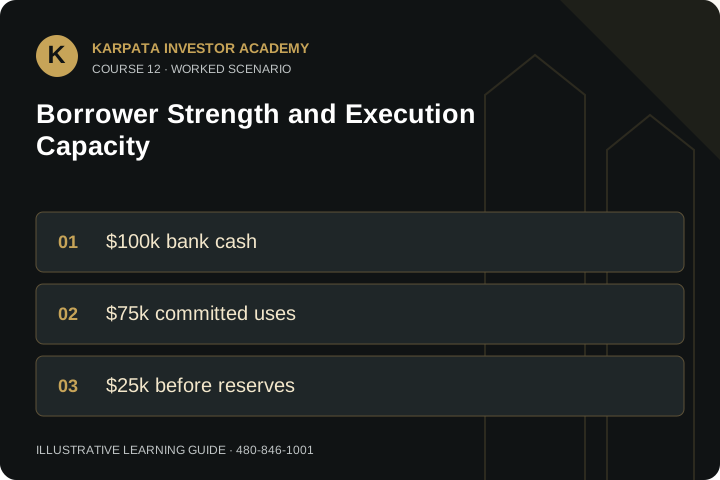
An investor shows $100,000 cash, but $40,000 is committed to another renovation and $35,000 is required for this closing. Only $25,000 remains before further reserves. Reporting the full $100,000 as post-closing liquidity would overstate capacity and obscure the actual ability to fund delays.
Mini glossary
- Sponsor
- Investor or group responsible for the project.
- Liquidity
- Funds available for obligations after committed uses.
- Relevant experience
- Prior execution applicable to the proposed strategy.
Put it into practice
Prepare a sponsor summary with funds available after commitments and closing. List relevant completed projects honestly and identify the roles of professionals. Reconcile bank evidence with your capital plan. Explain one execution weakness and the concrete support or reserve that mitigates it.
Recommended reading
Use these primary sources for context. Individual lender requirements can change; confirm the current program for your transaction.