
Evaluate Leases and Income Durability
A rent roll tells you who occupies the property, what they pay and when their obligations change. Commercial income depends on lease terms as well as current collections. Expiration dates, options, reimbursements, tenant improvements and leasing commissions can affect cash available for debt service and the cost of retaining occupancy.
Read the actual leases rather than relying only on the seller’s summary. A gross lease and a triple-net lease allocate expenses differently, and the names do not replace the contractual language. Check who pays taxes, insurance, maintenance and capital items. Expense reimbursements belong in the operating statement with matching costs and appropriate collection assumptions.
Concentration matters. A single tenant providing most of the income can create a larger vacancy shock than several smaller tenants, especially if replacing that tenant requires expensive buildout. Analyze lease rollover over the proposed loan term, market demand for the space and the time needed to re-lease. Historical occupancy alone does not guarantee future occupancy. Keep reserves for tenant improvements, leasing commissions and downtime where appropriate. The lender’s underwriting and legal review can highlight risks, but the investor remains responsible for understanding lease economics and operating obligations after closing.
Worked example
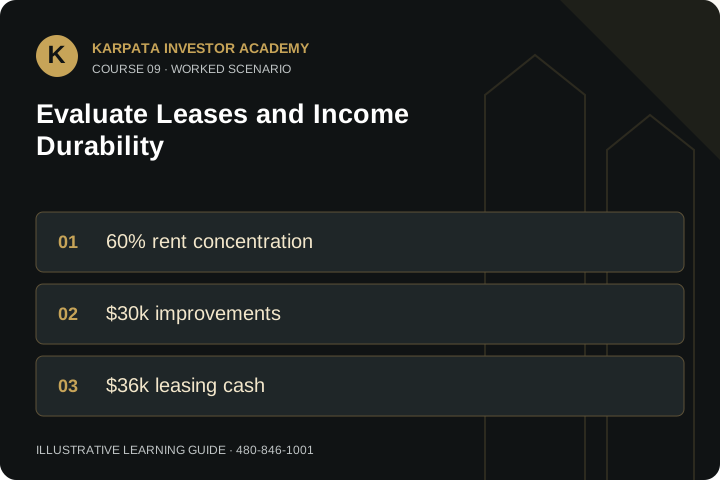
A building receives $120,000 annual rent; one tenant contributes $72,000 and expires next year. That tenant provides 60% of rent. If renewal requires $30,000 tenant improvements and $6,000 commissions, the investor needs a $36,000 leasing plan before considering any vacancy period or rent concessions.
Mini glossary
- Rent roll
- Summary of tenants, rents and lease dates.
- Rollover
- Lease expirations and renewal events.
- Tenant improvement
- Work funded to prepare or adapt space for a tenant.
Put it into practice
Make a lease-expiration calendar and calculate the largest tenant’s income share. List renewal options, expense obligations and expected leasing costs. Read the largest lease’s reimbursement and repair provisions. Test a vacancy interval and identify the liquidity needed to replace or retain that tenant.
Recommended reading
Use these primary sources for context. Individual lender requirements can change; confirm the current program for your transaction.